

Recessed shower niche: how to choose one and install it successfully in 2026?
A shower niche is practical, discreet and decidedly cleaner than a hanging caddy. But once the partition is closed and the finish has been installed, it is too late to realize that it is too small, poorly positioned or inadequately waterproofed.
30 × 60 cm for comfortable everyday use.
8 to 15 cm, depending on the partition and the products to be stored.
Usually between 110 and 130 cm from the finished floor.
Proper waterproofing around the niche, with no shortcuts.
Why choose a recessed niche?
Because it is more stable, cleaner and more durable. An add-on shelf can be useful temporarily, but it often ends up shifting, collecting grime or marking the wall. A well-installed niche becomes an integral part of the shower.
Everyday benefits
Bottles stay within easy reach, the shower looks less cluttered and cleaning is easier. There is no basket to take apart, no suction cup that comes loose and no metal holder that eventually rusts.
What to plan for
A niche should be planned before the tiles or wall panels are installed. You therefore need to think about its size, location and how water will be prevented from entering the partition from the outset.
Our opinion
A recessed niche is an excellent idea if it is designed as a technical part of the shower, rather than as a simple decorative accessory added at the end of the project.
What size should you choose for a shower niche?
The classic mistake is choosing a niche that is too small because it looks more discreet on the plan. In reality, a compact size can quickly become frustrating if several people use the shower or if you have large bottles.
| Size | What is it for? | Key takeaway |
|---|---|---|
| 30 × 30 cm | Single-user shower, small space, minimal storage. | Discreet, but quickly limiting if you want to place several products. |
| 30 × 60 cm The most practical | Daily use, couples, families, several bottles. | The best compromise for most bathrooms. |
| 63 × 33 cm and larger | Large shower, decorative project, more upscale finish. | Worth considering if the wall allows it and the niche is to become a genuine visual feature. |
In practice
If you are hesitating between two sizes, it is often best to choose the larger one. A slightly generous niche remains pleasant to use. A niche that is too small, on the other hand, will be noticeable every day.
Depth matters just as much as width
A wide but shallow niche is not necessarily comfortable. Bottles need to stand securely without falling over at the slightest movement. The depth mainly depends on the space available within the partition or the planned false wall.
- 8 to 10 cm: sufficient for standard products, but this is still the minimum. Reserve it for partitions where there is little room to work with.
- 10 to 15 cm: the most comfortable depth for a shower used every day. Bottles fit better and remain easy to reach.
- More than 15 cm: possible, but rarely necessary. Above all, the partition structure must be designed for it.
Before cutting into the wall, you need to know what is behind it.
Studs, cables, water supply lines, drainage, ventilation: a niche should not be placed solely where it would look good. It should be placed where the partition allows it to be properly integrated.
ABS, stainless steel, or LED niche: which should you choose?
Not all models meet the same needs. Some are designed to be covered with the wall finish, while others are made to remain visible and contribute to the bathroom’s style.
ABS Niche
ABS is lightweight, easy to handle, and suitable for projects where the niche will be integrated behind a covering. It is a good option for a simple renovation with a controlled budget.
Stainless Steel Niche
S.304 stainless steel gives a more finished appearance as soon as it is installed. It is well suited to modern bathrooms, especially when you want a visible, clean, and durable niche.
Niche with LED
The LED version is a good choice if the niche is to become a real decorative feature. It works particularly well in a dark shower or with mineral finishes.
What height should a shower niche be installed at?
A niche should be naturally accessible. If it is too low, you have to bend down. If it is too high, it becomes difficult to use. In a standard adult shower, the bottom of the niche is often placed between 110 and 130 cm from the finished floor.
| Configuration | Commonly used height | Note |
|---|---|---|
| Adult shower | Bottom of niche between 110 and 130 cm | Good comfort for reaching shampoo, soap, and accessories without bending down. |
| Family shower | Approximately 100 to 120 cm | A more practical compromise if the shower is used by adults and children. |
| Accessible / PRM-compliant project | To be defined according to the project constraints | Do not improvise: check the applicable rules and the actual needs of the person concerned. |
To avoid
Place the niche directly beneath the main spray. Water is more likely to stagnate there, limescale marks appear more quickly, and the seals are subjected to greater stress.
Waterproofing is the real issue
A shower niche is not complicated merely because a wall must be cut. It is mainly sensitive because it creates corners, connections, and joints in an area exposed to water.
- Checking the substrate: the wall must be sound, stable, clean, and suitable for installation in a wet area.
- Planning a precise cutout: an opening that is too wide makes finishing more difficult and requires larger joints.
- Treating the corners: these are the areas most vulnerable to water infiltration.
- Using a suitable waterproofing system: especially in a tiled shower or on plasterboard.
- Applying a clean sanitary silicone seal: continuous and even, without any gaps around the entire perimeter.
A leak around a niche can take time to become visible.
Water can slowly seep into the wall before visible signs appear: stains, odors, mold, or shifting wall covering. If in doubt, have the installation checked by a professional.
The mistakes we see most often
A successful shower niche is determined mainly before installation. Here are the mistakes that can ruin the result, even with a good product.
- Choosing one that is too small: in a photo, a 30 × 30 cm niche may seem sufficient. In a real shower, with several bottles, it can quickly become too small.
- Forgetting usable depth: a niche should hold your products, not merely accommodate them on paper.
- Placing it directly in the spray path: this is rarely the best location for maintenance and seal longevity.
- Neglecting wall constraints: you should never cut into a wall without checking what is inside it.
- Skipping waterproofing: this is the most costly mistake in the long term.
- Using an overly harsh cleaning product: especially on stainless steel, where chlorine-based, acidic, or abrasive products should be avoided.
Our built-in shower niches
Compact size, family model, or visible stainless steel finish: the right choice depends mainly on your shower, your wall covering, and the look you want.
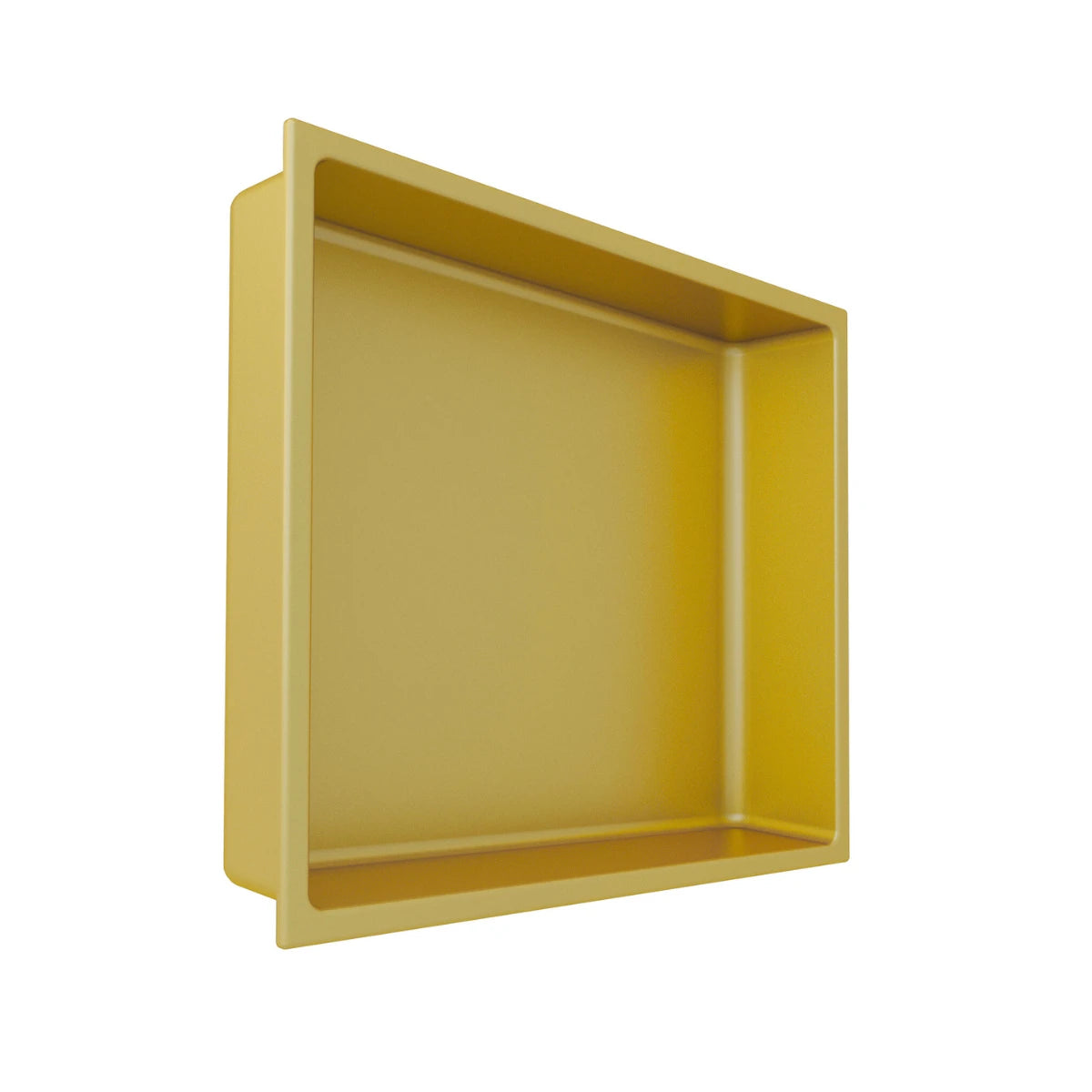
Compact ABS niche for a small shower or discreet storage.
30 × 30 cm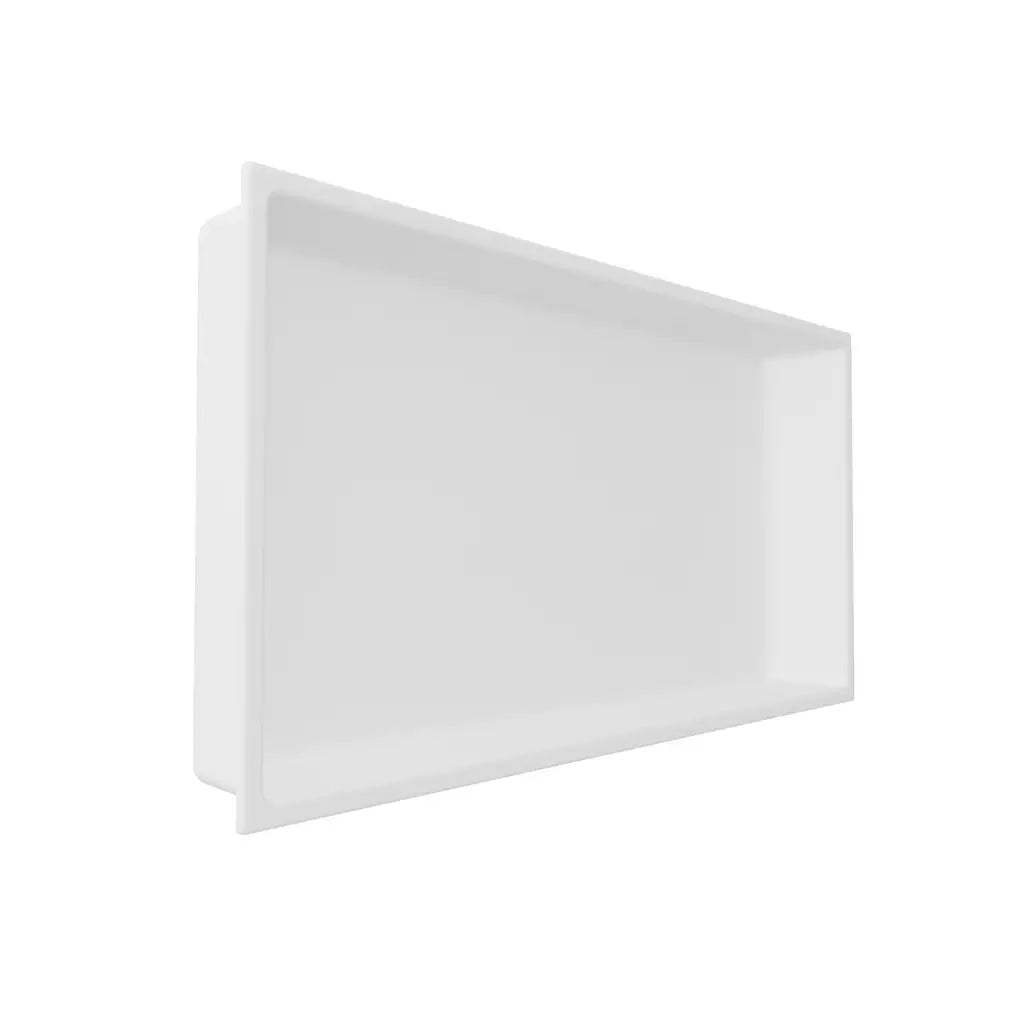
Comfortable format for daily use with multiple products.
30 × 60 cm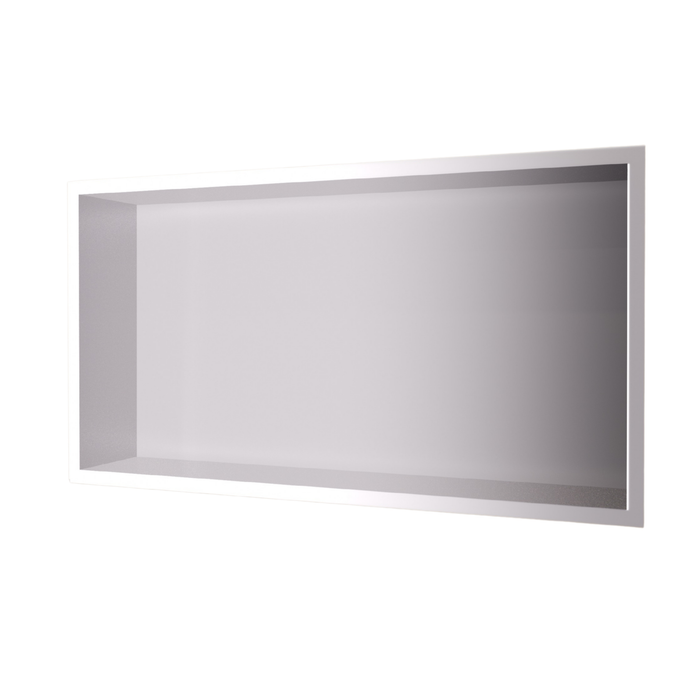
Large-format stainless steel niche for a visible, more premium finish.
63 × 33 cm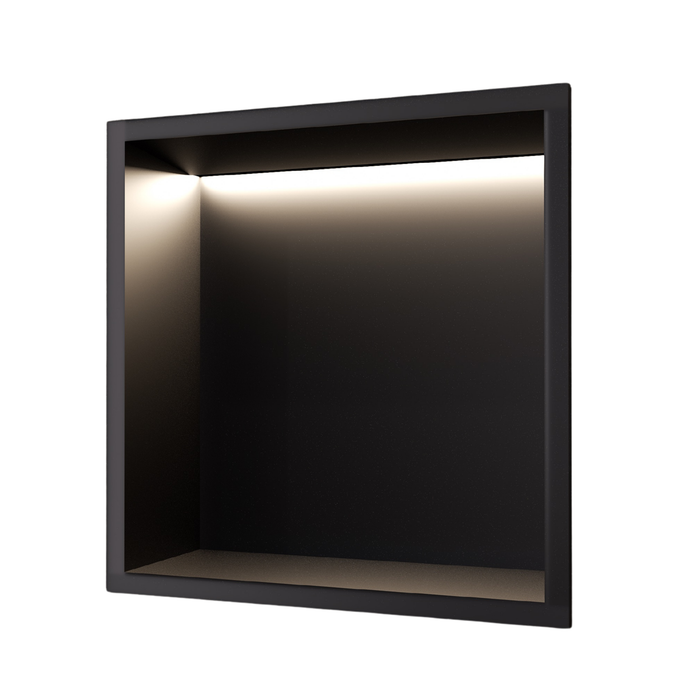
Stainless steel niche with integrated lighting for a more decorative shower.
33 × 33 cmHow do you keep a niche clean over time?
A shower niche requires little maintenance, provided you do not let limescale and soap residue build up. The simplest approach is to wipe the area regularly, especially if the water is hard.
For ABS
Use a soft sponge or microfiber cloth with a neutral household cleaner. Avoid abrasive powders and scouring pads, which can mark the surface.
For S.304 stainless steel
Clean with a damp microfiber cloth, rinse with clean water, then wipe dry. Avoid chlorinated, acidic or abrasive products.
Things to watch for
The silicone seal remains a wear item. If it turns black, cracks or comes loose, it must be removed and redone properly. Adding silicone over the old seal does not solve the problem.
Leave a comment