

How to choose the perfect LED mirror for your bathroom in 2026 ?
Dimensions, lighting, visual comfort, electrical safety and useful features: an LED mirror is no longer chosen solely for its design. When well designed, it improves everyday lighting, enhances the bathroom and provides genuine user comfort. You still need to know which features are truly useful and which dimensions to choose.
Often close to or slightly wider than the vanity unit.
4000K for balanced everyday lighting.
The anti-fog function remains the most practical option for everyday use.
Choose a mirror suitable for damp areas (IP44 minimum).
Choosing the right dimensions for the mirror
The mirror’s size directly affects the visual balance of the bathroom. A mirror that is too small looks lost above the cabinet, while an oversized model can overwhelm the room, especially in a small bathroom.
The goal is to maintain coherent proportions between the mirror, vanity, cabinet and available wall space. A well-sized mirror also improves the distribution of light throughout the room.
| Configuration | Recommended dimensions | Key takeaway |
|---|---|---|
| Single vanity | 60 to 90 cm wide | The most common size for a standard bathroom. |
| Double vanity Very comfortable | 100 to 140 cm | Provides better symmetry and greater comfort for two people. |
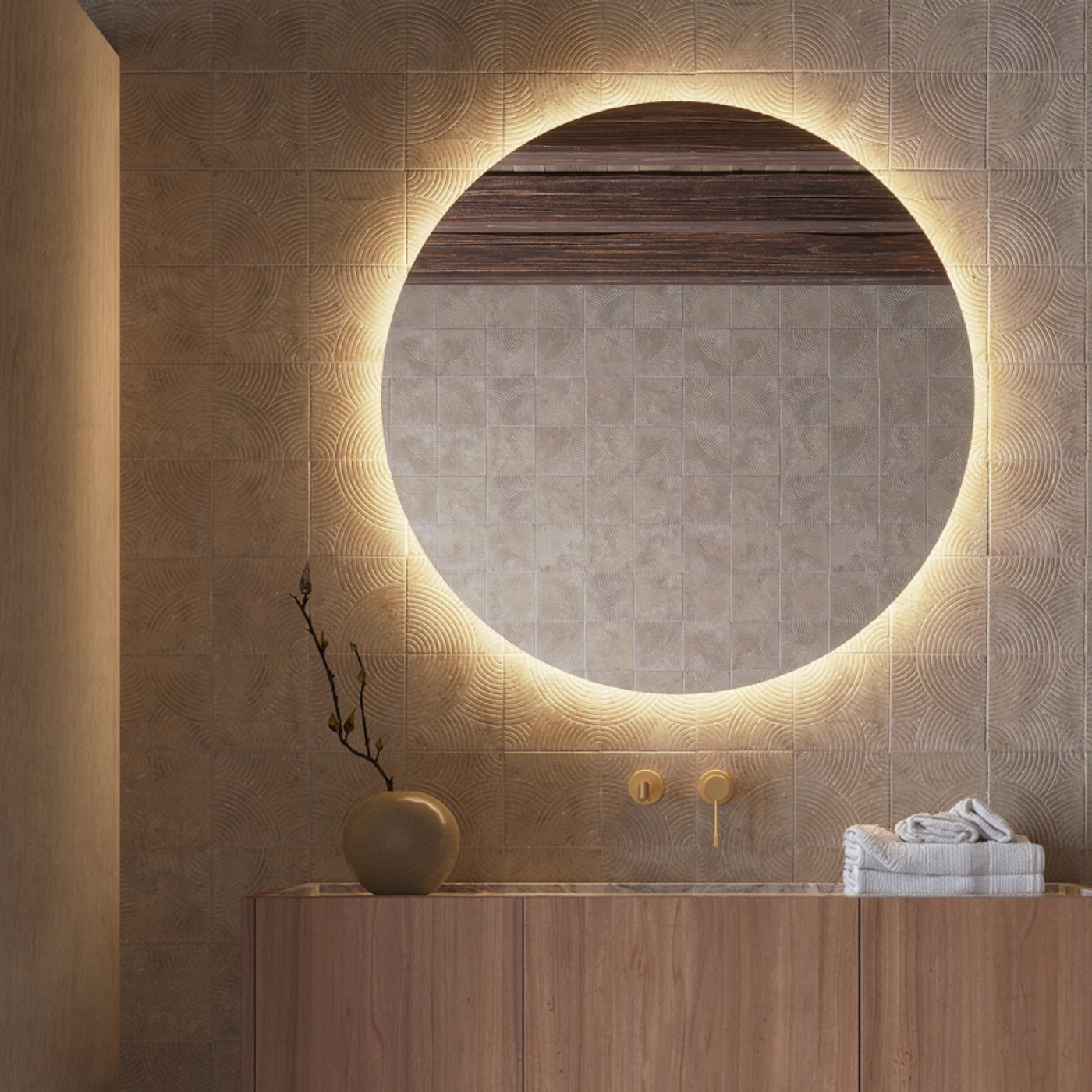
| Small bathroom | Round or oval shape | Makes the space look lighter and avoids a bulky appearance. |
Visual tip
A mirror slightly wider than the vanity unit often creates an impression of depth and volume, especially in a compact bathroom.
Our most popular LED mirrors
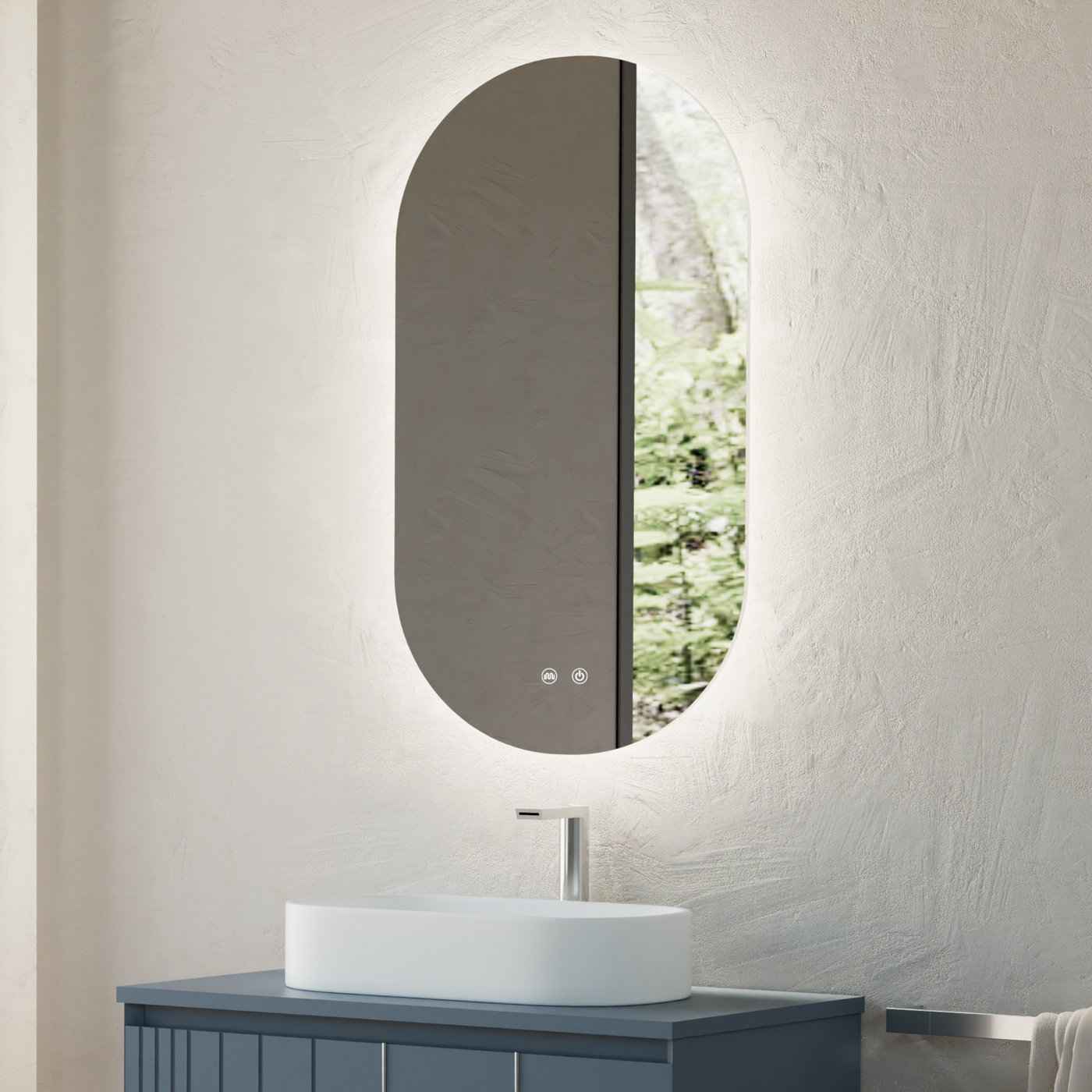
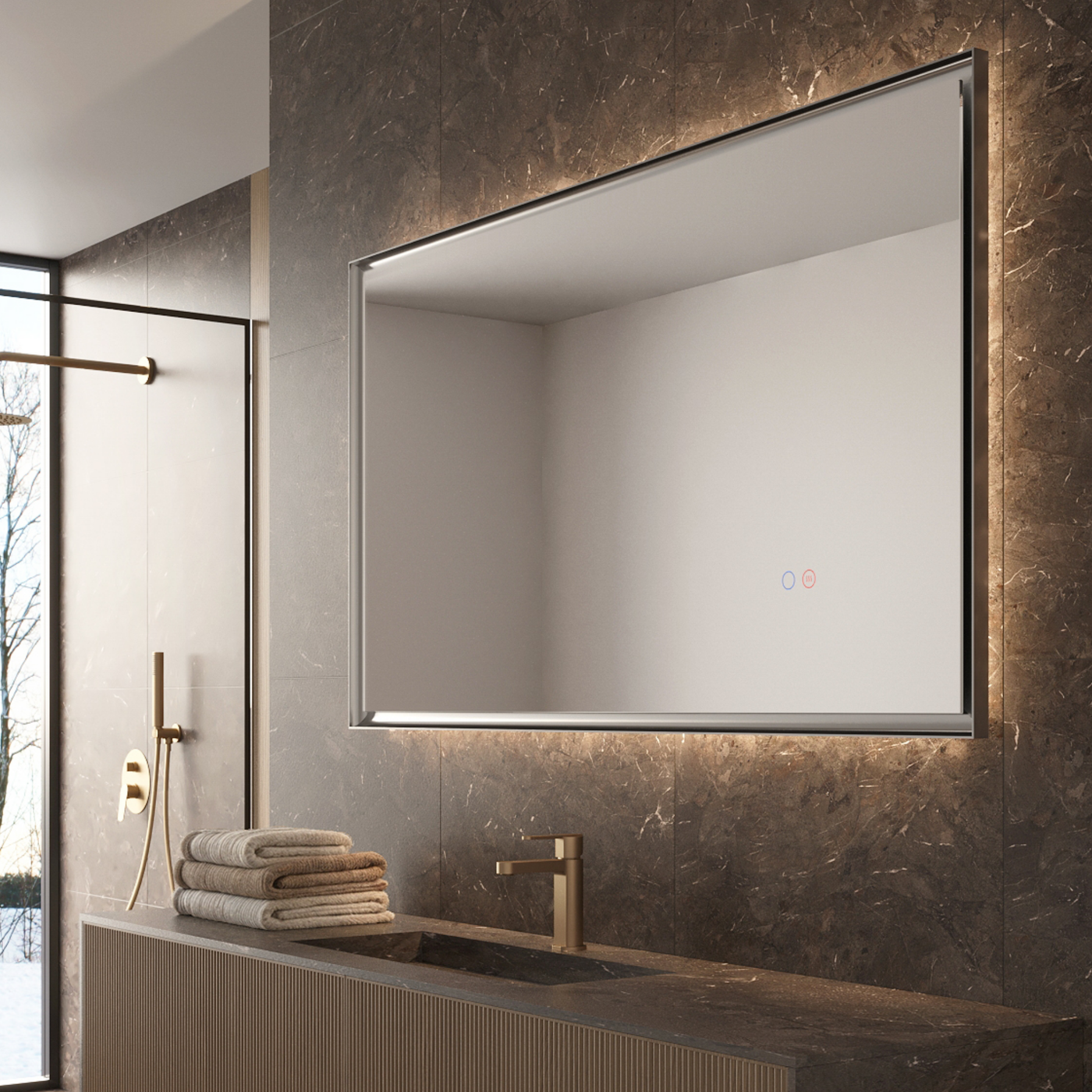
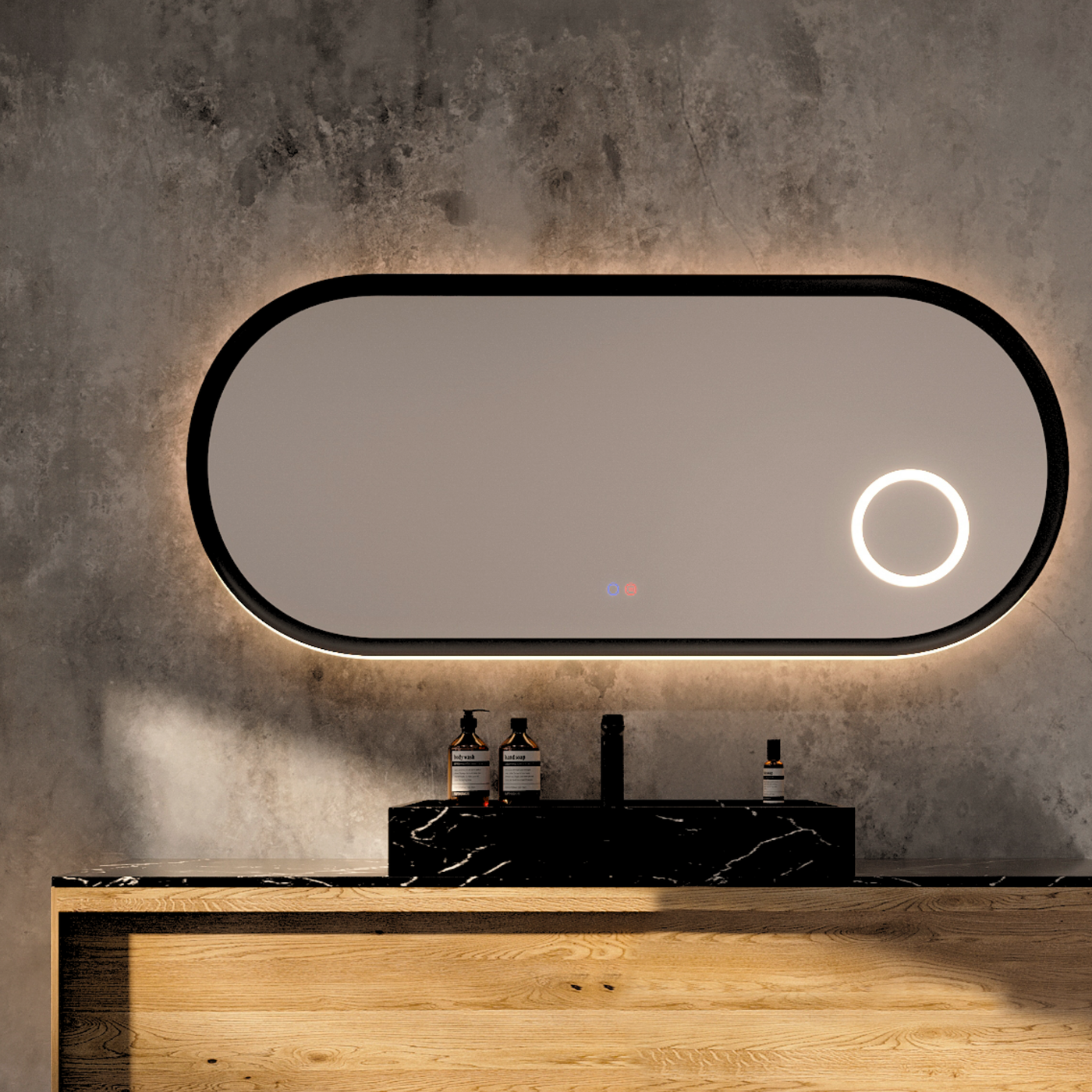
Anti-fog, Tri-LED, backlighting or smoked glass: each mirror is suited to a different use and ambiance.
Color temperature, CRI and power: what really matters
An LED mirror is not just decorative. Its primary role is to illuminate the face evenly and accurately. Poor lighting can make the complexion look too yellow, too blue, or create unpleasant shadows in everyday use.
2700 to 3000K
Soft, warm light, ideal for a relaxing atmosphere in the evening.
4000K
The most balanced lighting for everyday grooming, close to natural light.
6000K
Very bright and precise, useful for makeup application or detailed shaving.
CRI: a true comfort criterion
The Color Rendering Index measures color accuracy. For a bathroom, a CRI above 90 is highly recommended.
Lumens and power
Between 700 and 1200 lumens, an LED mirror comfortably meets the needs of a standard bathroom without excessive energy consumption.
A good compromise
A Tri-LED mirror with a high CRI lets you adapt the lighting ambiance to the time of day while maintaining a natural-looking complexion.
The truly useful everyday options
Some features genuinely improve ease of use, while others are more of a gimmick or secondary convenience.
Anti-fog
A heating element limits condensation after a shower. Very useful in poorly ventilated bathrooms.
Touch control
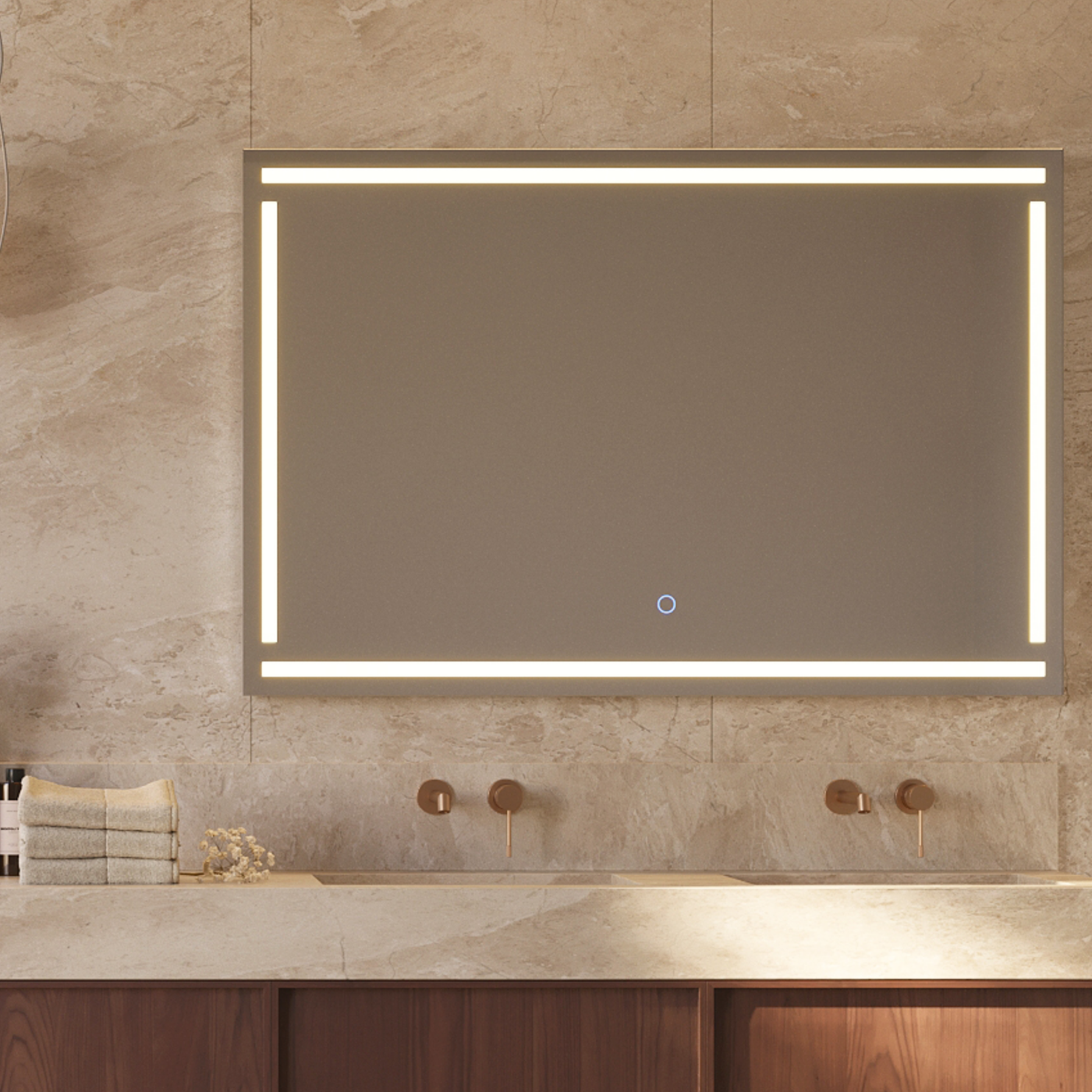
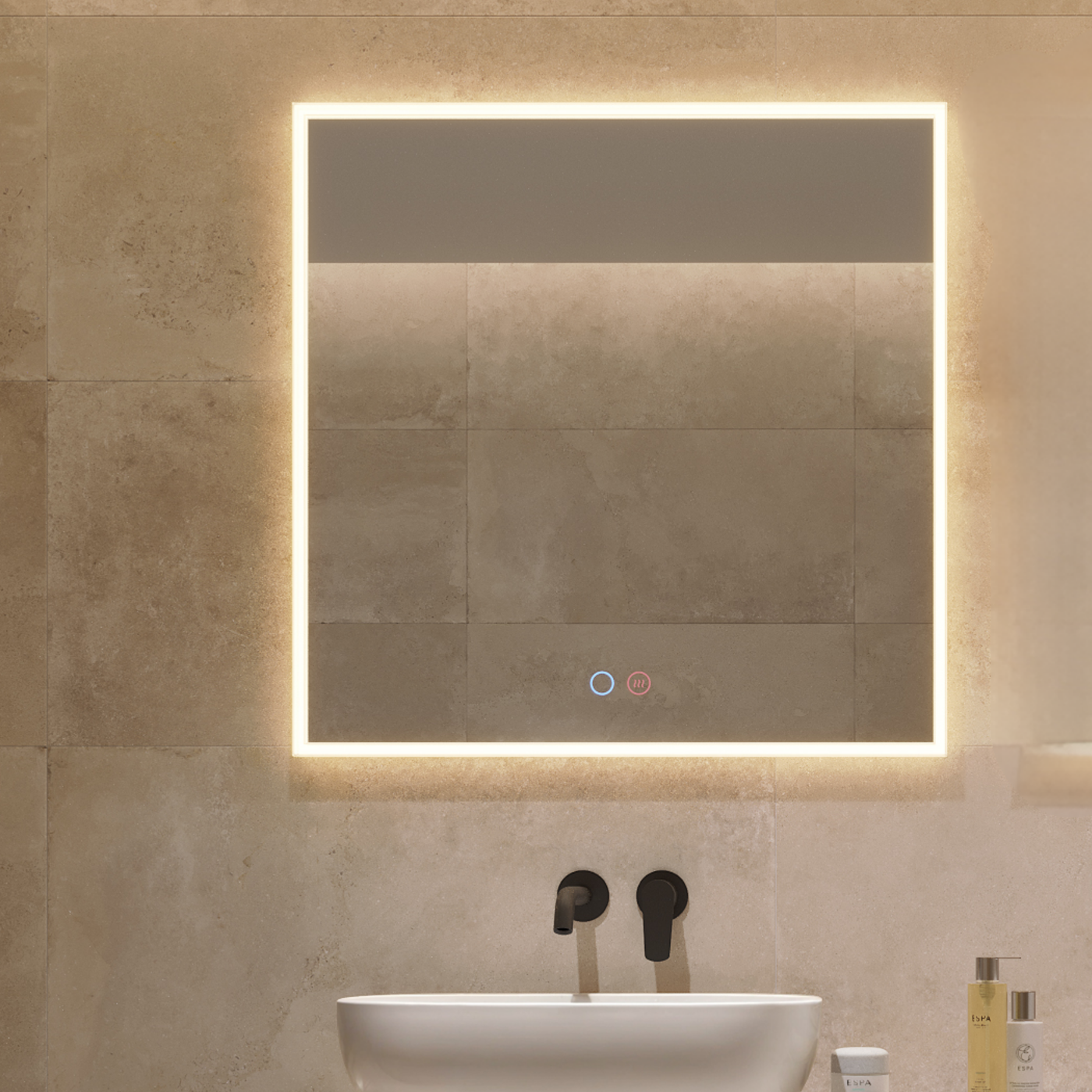
Allows you to turn the light on, adjust it, or change the light temperature directly from the mirror.
Tri-LED
The most useful feature for adapting the lighting ambiance to different uses.
Bluetooth and wireless charging
Pleasant for certain uses, but rarely essential in a standard bathroom.
The most useful trio
If you need to prioritize: anti-fog, Tri-LED, and a high CRI already cover the vast majority of everyday needs.
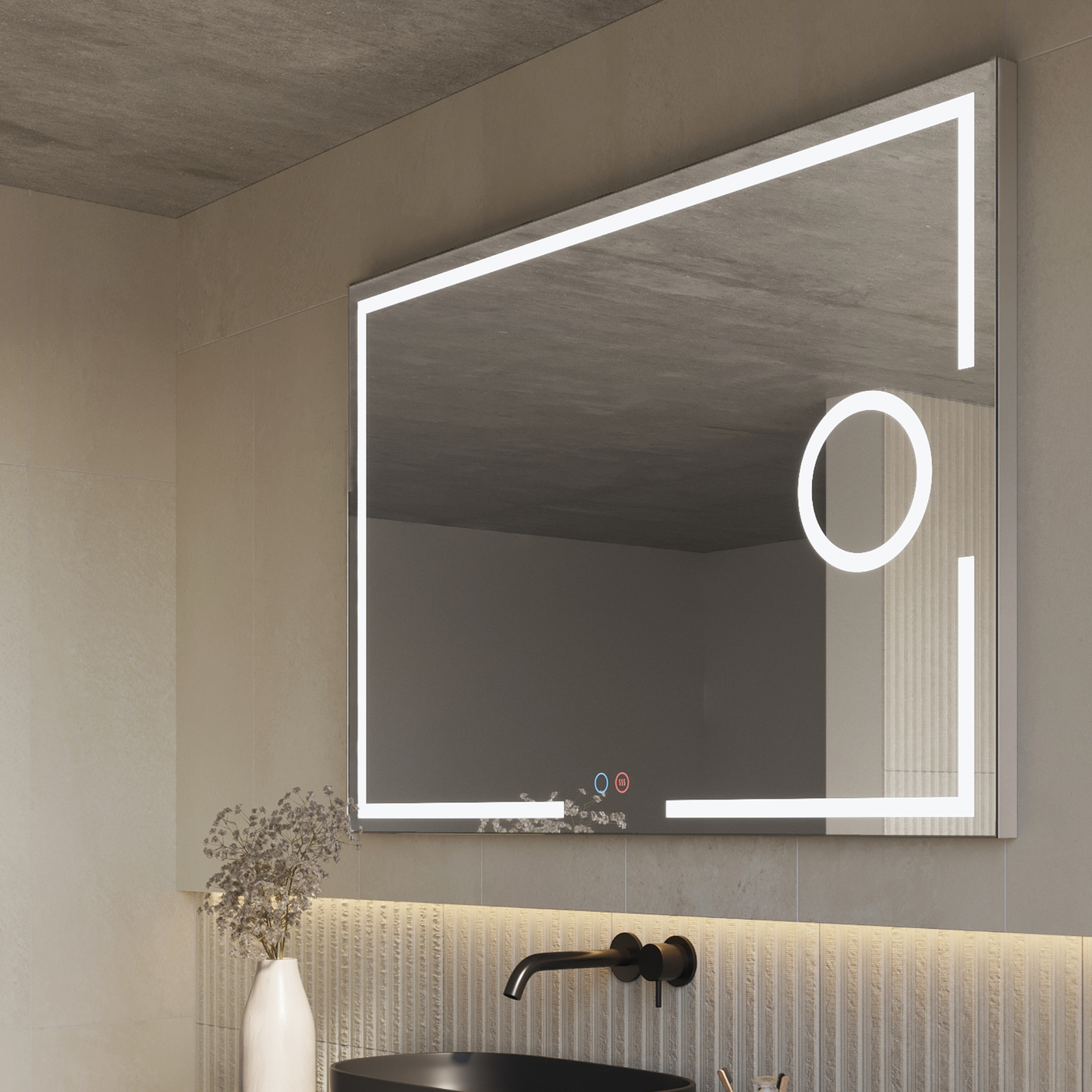
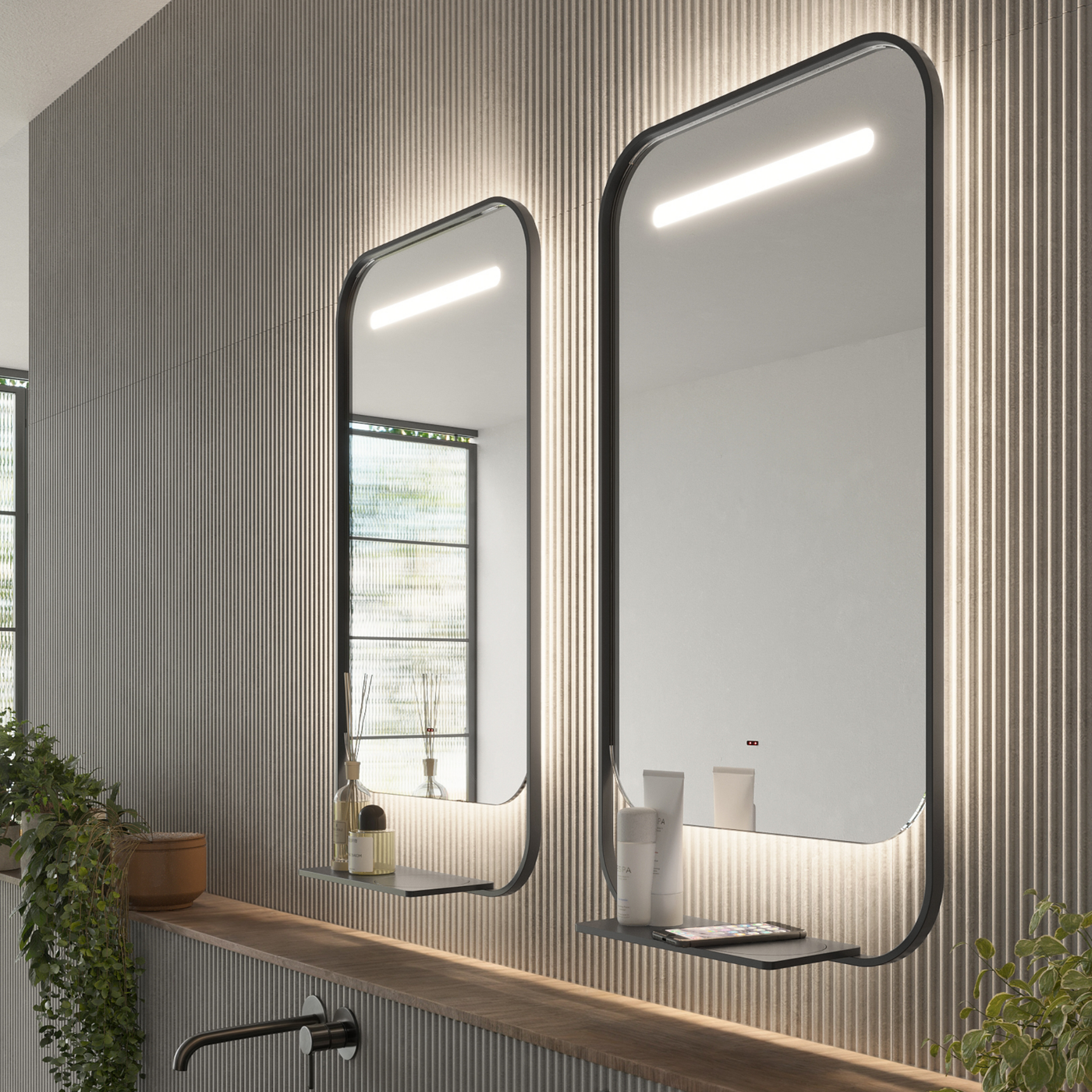
LED mirrors with premium options
IP ratings and electrical safety: what to check
A bathroom is a humid room. The LED mirror must therefore be designed to withstand humidity and water splashes.
- Minimum IP44: recommended around the vanity unit.
- IP65: preferable if the mirror is frequently exposed to splashes.
- NF C 15-100 standard: essential for complying with electrical regulations in bathrooms.
- Safe installation: if in doubt, have a professional handle it.
To avoid
Installing a mirror that is not suitable for damp areas can significantly reduce its lifespan and create electrical hazards.
Shapes and styles: a real impact on space
The shape of the mirror strongly influences the perception of space and the overall atmosphere of the bathroom.
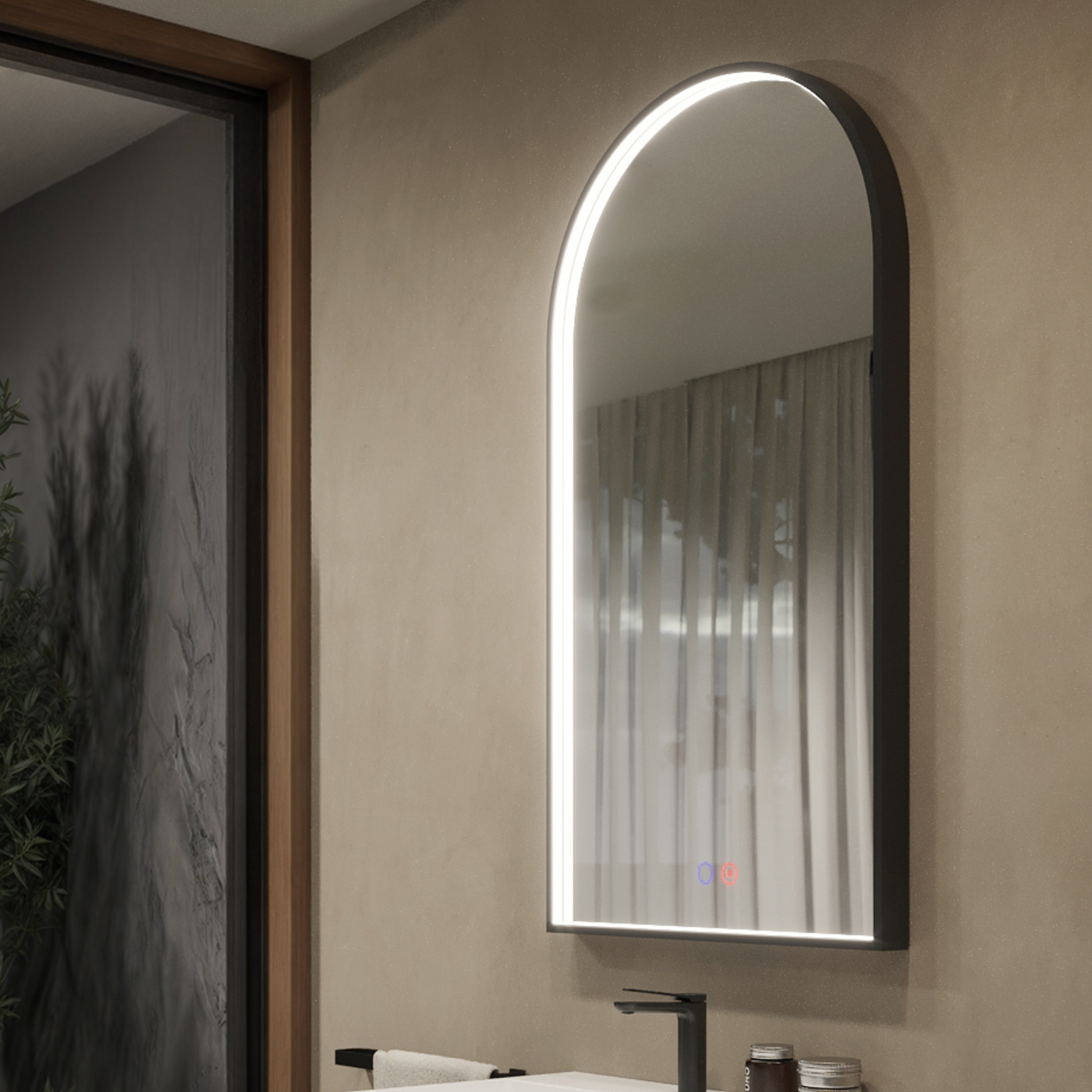
- Round or oval: softens the lines and works very well in small spaces.
- Rectangular: structured, modern, and easy to pair with a vanity unit.
- Black frame: adds a more distinctive industrial or contemporary touch.
- Frameless: enhances the minimalist look and leaves more room for light.
The most common mistakes with an LED mirror
- Choosing a mirror that is too small: it looks lost above the vanity unit.
- Neglecting the light temperature: light that is too cool or too warm quickly becomes uncomfortable.
- Ignoring the CRI: facial colors may appear distorted.
- Installing it too high: user comfort decreases quickly.
- Forgetting the anti-fog feature: particularly regrettable in a poorly ventilated bathroom.
Leave a comment